







Manchester Café Culture: Coffee Shops, Dining, and Nightlife
Let's dive in to the café culture of one of our favourite cities.
Manchester doesn't do things by halves. From the music that defined a generation to the football that divides dinner tables, this city has always had a knack for turning the everyday into something worth showing up for. And nowhere is that more true than in its café culture.
The coffee shop has quietly become one of the most important rooms in Manchester's social architecture. It's where deals get done, ideas get out of someone's head and onto a napkin, and, more recently, where the night actually begins rather than ends.
If you want to understand the city, you could do a lot worse than starting with what's in the cup.
The Origins of Café Culture in Manchester
Long before flat whites were a personality type, Manchester had its coffee houses. The city's first wave of café culture arrived in the 18th century, when coffeehouses became the original social networks, places where merchants, radicals, and thinkers would gather to swap news, argue politics, and generally make a nuisance of themselves in the most productive way possible.
As Manchester grew into the engine room of the Industrial Revolution, the working café took on a different kind of importance. Transport cafés, greasy spoons, and city-centre lunch spots became the connective tissue of a city that ran on labour. They weren't glamorous. They were functional. They were necessary.
But something interesting happened along the way... people started to linger. A quick brew became a long conversation. A lunch break became an afternoon. Manchester's cafés had stumbled onto something. The city actually liked being in them.
From Coffee Stops to Community Spaces
By the late 20th century, the coffee shop in Manchester had evolved from a pit stop into a destination. The Northern Quarter—always the city's most reliably weird and wonderful neighbourhood—became a testing ground for a new kind of Manchester café. One with mismatched furniture, local art on the walls, and a tolerance for people who'd nurse a single americano for three hours.
These were places to be. Independent cafés started hosting open mic nights, poetry readings, community meetups, and the kind of low-key events that don't make it onto a poster but somehow everybody hears about anyway.
The café became a third place. Not home, not work, but somewhere in between. The coffee shops Manchester built during this era weren't just businesses. They were neighbourhood institutions.
The Rise of Coffee Roasters and Quality-Driven Coffee
Somewhere in the 2010s, Manchester's relationship with coffee got serious. A new wave of independent coffee roasters arrived. Suddenly the city was talking about origin, processing methods, brew ratios, and extraction times with the same intensity it had previously reserved for Oasis reunion rumours.
The question stopped being "milk and sugar?" and started being "single origin or blend?" The best coffee in Manchester was no longer just about caffeine delivery. It was about craft, sourcing, and the story behind the bean.
This shifted expectations everywhere. Cafés that previously got away with mediocre espresso suddenly found themselves under pressure from a customer base that actually knew what good coffee tasted like. The city's palate had levelled up. And the coffee shops Manchester fell in love with had to keep pace.
The result was a more discerning, more exciting café scene.
Café Culture and Creativity in Manchester
Ask any Manchester freelancer where they do their best work and there's a good chance it doesn't involve an office. Manchester café culture has long had a symbiotic relationship with its creative community—designers, writers, musicians, and makers who gravitated towards coffee shops as their de facto studios.
There's something about the ambient noise of a good café, you know that particular hum of espresso machines, low conversation, and the occasional burst of laughter? The brain seems to find this genuinely useful.
Cafés in the Northern Quarter, Ancoats, and Chorlton became unofficial coworking spaces long before anyone called them that. Students from Manchester Metropolitan and the University of Manchester filled booths with laptops and theory textbooks. Startups had their first meetings over flat whites. Album concepts were sketched on napkins.
Why Café Culture No Longer Ends at 3pm
For a long time, closing at 5pm was just how cafés worked. Coffee was a morning thing, maybe a lunchtime thing. By evening, you were in a pub or a restaurant. The boundaries were clear and the city respected them.
Then something shifted. Manchester's café scene started borrowing from its bar culture. Venues began staying open later, introducing evening menus, natural wines, and cocktails that sat alongside the cold brew. The all-day café became a cultural evolution.
This blurring of the lines suited Manchester perfectly. The city has always been less interested in rules than in results, and the result here was better: a more relaxed, more social kind of nightlife. Not every evening needs to start with a round of shots and end at 3am. Sometimes it's a martini with dinner, a cocktail with friends, and calling it a night at a reasonable hour feeling like a functioning adult.
The new wave of all-day venues became a genuine contribution to nightlife in Manchester — not replacing the clubs and bars, but giving the city a broader, more grown-up social landscape to navigate. The café-bar became its own thing. And Manchester, characteristically, decided it was here to stay.
How Grind Represents the Future of Café Culture in Manchester
Everything that Manchester's café culture has been building towards—the craft coffee, the community feel, the creative energy, the all-day social space—comes together at Manchester Grind, our home in the city.
Grind isn't trying to reinvent the wheel. We’ve just built a very good one. The space is design-led without being cold, the coffee is serious without being snobbish, and the food and cocktail menus give you every reason to arrive at brunch and not leave until last orders. Which, honestly, is how every Saturday should be.
The breakfast in Manchester conversation has a new entry worth knowing about. Whether you're after a proper brunch before a long afternoon or a quick coffee before heading into the city, Grind delivers on both without feeling like it's hedging its bets. It has a point of view, and in a city that respects confidence, that matters.
As evening arrives, Grind shifts into something slightly different but equally considered. The cocktail list is inventive. The atmosphere changes. What started as a coffee stop becomes one of the better spots to spend an evening in the bars Manchester has to offer, without any of the fuss.
This is where café culture in Manchester has been heading. A place that can hold a morning meeting, fuel a creative afternoon, host a long lunch, and pour a great cocktail, all without changing its personality in the process. Grind in Manchester is that place.
Ready to see what all the fuss is about? Book a table at Grind Manchester.
Frequently Asked Questions
Is Grind Manchester an all-day restaurant, coffee shop, and cocktail bar?
Exactly. Grind Manchester operates as a fully all-day venue, opening as a coffee shop and breakfast spot in the morning and evolving into a restaurant and cocktail bar as the day progresses. You can pop for a flat white at 9am or a negroni at 9pm to sample the best of nightlife in Manchester, and the space will meet you where you are both times.
What are some top-rated dishes on the brunch menu at Grind?
We’re big on brunch. People go mad for our Grind breakfast (rich yolk eggs, thick-cut Essex salt marsh bacon, roast tomato, hash browns, Cumberland sausage, baked beans, flat mushroom, and sourdough toast). If you’re looking for something lighter, you’ll love our smashed avocado on sourdough toast or our Açai bowl.
What are the most popular cocktails at Grind in Manchester?
We reckon we make the best coffee in Manchester, so naturally we make really good espresso martinis. It’s kind of our thing. Oh, and they’re only £5 on Fridays. If coffee’s not your bag, we do the classics too, as well as seasonal twists throughout the year.
What specialty coffee is available at Grind Manchester?
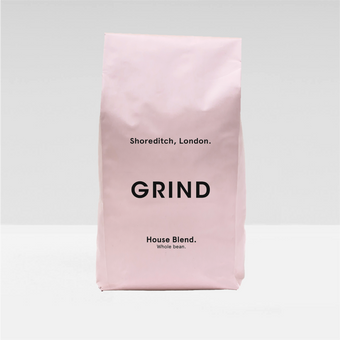
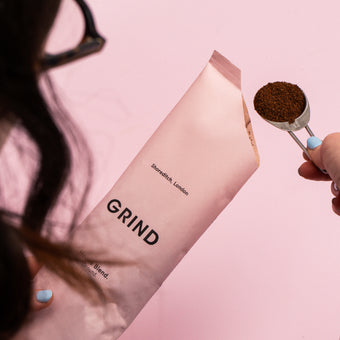
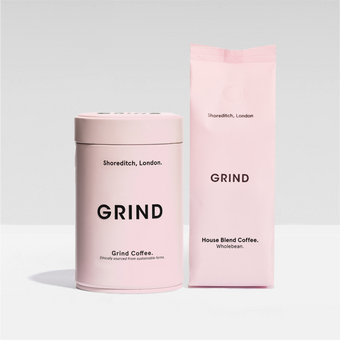
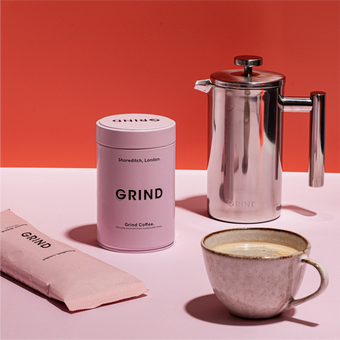
Grind roasts our own coffee, which means you're getting something with a direct line from bean to cup. The menu covers all the classics—flat whites, cortados, cold brew— alongside rotating single origins and seasonal filter options for those who like to go deeper. Whether you're a daily flat white person or the kind who asks about processing methods, there's something here for you.
Is Grind Manchester vegetarian and vegan-friendly?
Absolutely. From Turkish eggs and sweetcorn & courgette fritters, our brunch menu is packed with delicious vegetarian and vegan options. Joining us for dinner? Tuck into small plates like hummus and confit garlic, charred tenderstem broccoli with romesco or smoky padron peppers. We change our menu regularly to keep things fresh, so head down to see what’s on offer at Grind’s Manchester café.
Does Grind in Manchester serve mocktails?
Of course. Just because you’re not drinking doesn’t mean you should compromise on great taste. You might like our Pink Lemonade, made with raspberries, lemon, and soda. Our team are big fans of the Crodino, a non-alcoholic twist on an Italian Aperitivo.
Book your table at Manchester Grind today.






Comments